Every group trip hits the same wall: six people, twelve opinions, and zero decisions. Someone suggests a restaurant. Someone else suggests a different one. A third person says "I'm easy, whatever works." The thread goes silent for three days, and eventually the planner just picks something, hoping nobody complains.
This isn't a people problem. It's a process problem. Groups default to open-ended discussion because it feels democratic, but unstructured debate is the worst way to make decisions with more than two people.
Why Group Decisions Fail
Most group travel decisions stall for one of three reasons:
Too Many Options, No Way to Filter
When everyone throws suggestions into a group chat, you end up with a wall of links and opinions with no mechanism to compare them. The conversation becomes a stream of consciousness rather than a decision funnel. After 40 messages, you're further from a decision than when you started.
The Loudest Voice Wins
Without structure, the person who responds fastest and with the most enthusiasm tends to set the agenda — even if their preference doesn't represent the group's actual interests. Quieter members opt out of the conversation entirely, then feel disconnected from the plan.
"I Don't Care" Actually Means "I Don't Want to Decide Right Now"
The person who says "whatever works for me" during planning is often the one with the strongest reaction during the trip. They're not being dishonest — they genuinely struggle to make choices in the abstract. But when they're standing in front of two options in real life, suddenly they care deeply.
The Case for Voting
Voting solves all three problems at once. Instead of open-ended discussion, you present 2-3 specific options and ask the group to pick. This works because:
- It's low effort. Tapping a vote is easier than writing a paragraph explaining your preference.
- Everyone participates equally. The quiet person's vote counts the same as the loud person's.
- It produces a clear outcome. When the cooking class beats the wine tour 4-2, the group moves forward without lingering debate.
- It feels fair. Even if your option didn't win, you had a voice. That's psychologically different from someone else deciding for you.
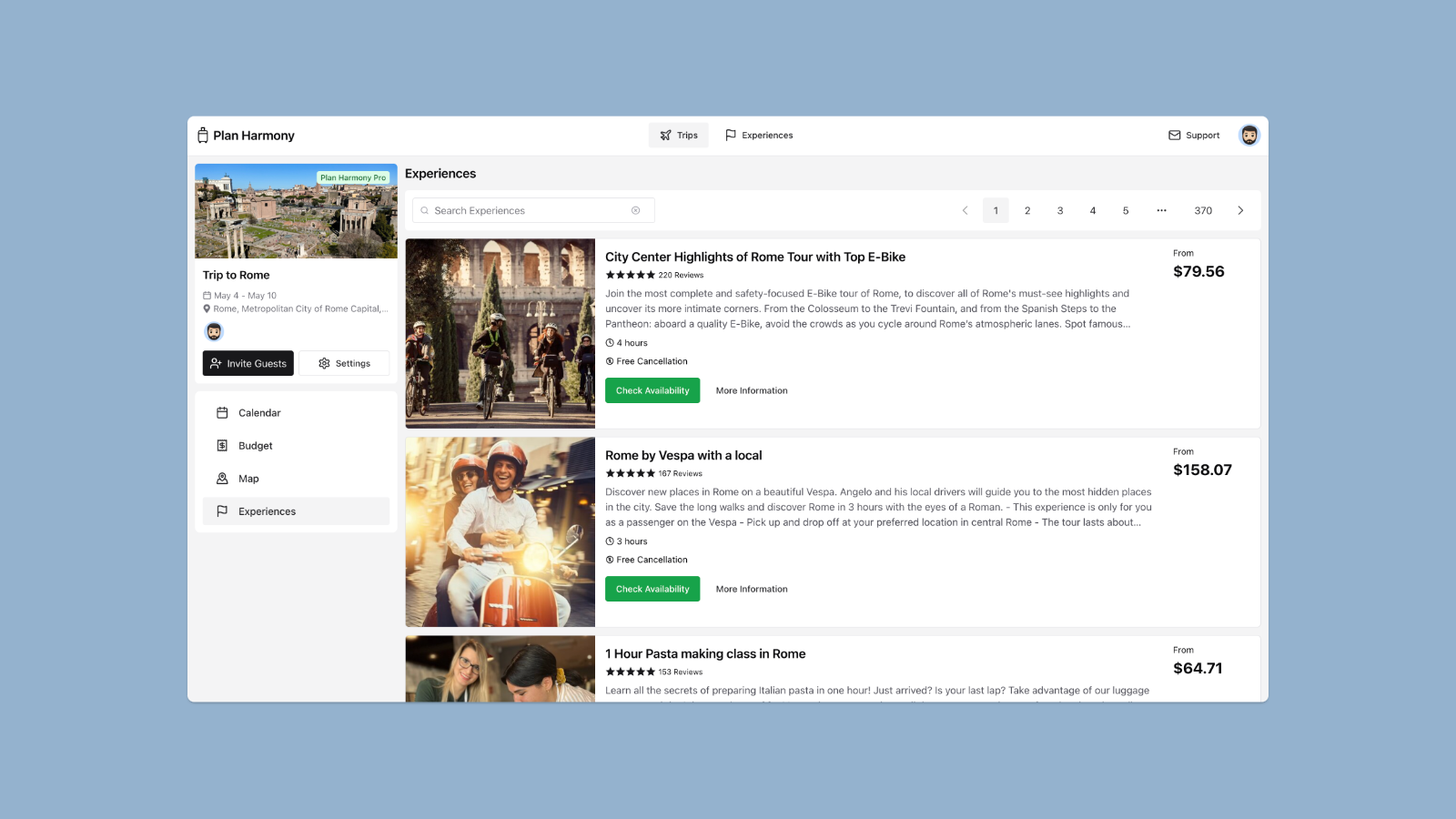
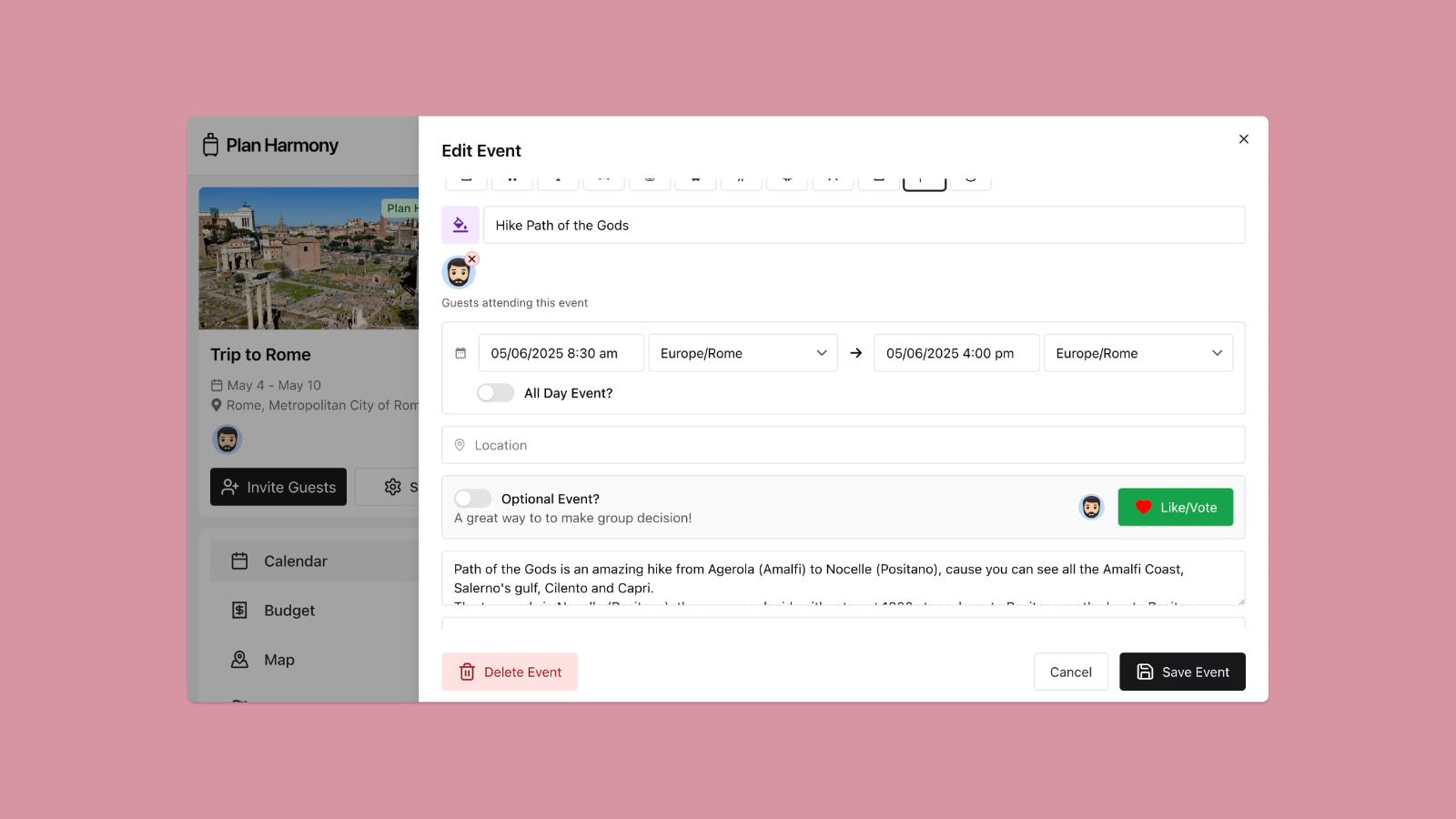
With Plan Harmony, you can add options for any decision — restaurants, activities, accommodations, day plans — and let the group vote. The winning option gets added to the itinerary. Done.
Decision Sequencing: What to Decide First
Not all decisions are equal. Making them in the right order prevents cascading conflicts:
- Dates first. Everything else depends on when you're going. Lock this down before discussing anything else.
- Budget second. Agree on a per-person budget before researching destinations or accommodations. This eliminates options that would cause financial tension later.
- Destination third. With dates and budget set, the destination conversation is already constrained to realistic options.
- Accommodation fourth. This depends on destination, group size, and budget — all of which you've already decided.
- Activities last. Once you know where, when, and what you can afford, planning daily activities becomes straightforward.
This sequence sounds obvious, but most groups try to discuss everything simultaneously. "Should we go to Portugal or Greece?" and "What's the budget?" and "Are we doing an Airbnb or hotel?" all happening in the same group chat thread is a recipe for planning paralysis.
Ground Rules That Prevent Conflict
Before the first decision, set these expectations:
- Majority rules, with grace. If the group votes, honor the result. No relitigating decisions that have been made.
- Everyone votes or forfeits. If you don't vote within the window, you're agreeing to go with the group's choice. This prevents the "I wasn't asked" complaint later.
- The planner facilitates, not dictates. The person organizing the trip presents options and runs votes — they don't make unilateral decisions. And the group respects their effort by actually participating.
- It's okay to split up. Not every activity needs to be unanimous. If three people want the beach and three want the museum, that's a fine outcome. The itinerary can accommodate both.
How Plan Harmony's Voting Works
Plan Harmony makes group decisions practical instead of theoretical. Here's the flow:
- The organizer (or anyone in the group) adds 2-3 options for a decision — say, three restaurant options for Saturday dinner.
- Each option includes a description, link, and any relevant details (price range, location, vibe).
- The group votes directly in the trip plan. No separate poll app, no group chat thread to scroll through.
- The winning option gets added to the itinerary with one tap.
This turns a 30-message group chat debate into a 30-second vote. Multiply that across every decision in a week-long trip, and you've saved hours of planning friction.
Stop Debating. Start Deciding.
The best group trips aren't the ones where everyone gets exactly what they want — they're the ones where decisions happen efficiently, everyone has a voice, and the group spends their energy on the experience instead of the logistics.
Give your group a system for making decisions, and the planning phase stops being the hardest part of the trip.
Try Plan Harmony — and turn group opinions into group decisions.
Enjoyed this article?
Share it with fellow travelers planning their next adventure.