Picking a destination is the easy part. Figuring out what to actually do there — with a group of people who have different interests, energy levels, and definitions of "fun" — is where the real challenge starts.
One person wants museums. Another wants beaches. Someone's a foodie, someone else just wants to hike. And if you pick wrong, you end up with half the group pretending to enjoy something they didn't want to do, which is worse than no plan at all.
Why Group Activity Selection Is Harder Than It Looks
When you travel solo, choosing activities is simple: you do what you want. With a group, every choice becomes a negotiation. And the bigger the group, the harder it gets.
The typical approach — "everybody throw out ideas in the group chat" — creates two problems. First, the loudest voices dominate. The person who responds fastest with the most enthusiasm tends to set the agenda, even if their preferences don't represent the group. Second, too many options create decision paralysis. Twenty suggestions with no way to prioritize them leads to the conversation dying, and the planner making all the calls by default.
What you need isn't more suggestions. You need a way to surface options, filter by group preference, and decide together.
Match Activities to Your Group's Actual Interests
Before you start researching activities, figure out what your group actually cares about. Not in the abstract — specifically for this trip.
Ask each person to pick their top two priorities from a list like:
- Food and dining experiences
- Outdoor adventures and nature
- History, culture, and museums
- Nightlife and entertainment
- Shopping and local markets
- Relaxation (beaches, spas, slow mornings)
When you see the overlap, the itinerary builds itself. If four out of six people picked food and two picked outdoor adventures, you know to anchor the trip around culinary experiences with a day hike mixed in. No debate needed.
Go Beyond TripAdvisor's Top 10
Every destination has the same "top things to do" list on TripAdvisor, Google, and every travel blog. Those lists aren't bad — they're just the same recommendations everyone else follows. If you want a trip that feels personal rather than prescribed, you need to dig deeper.
Try these approaches:
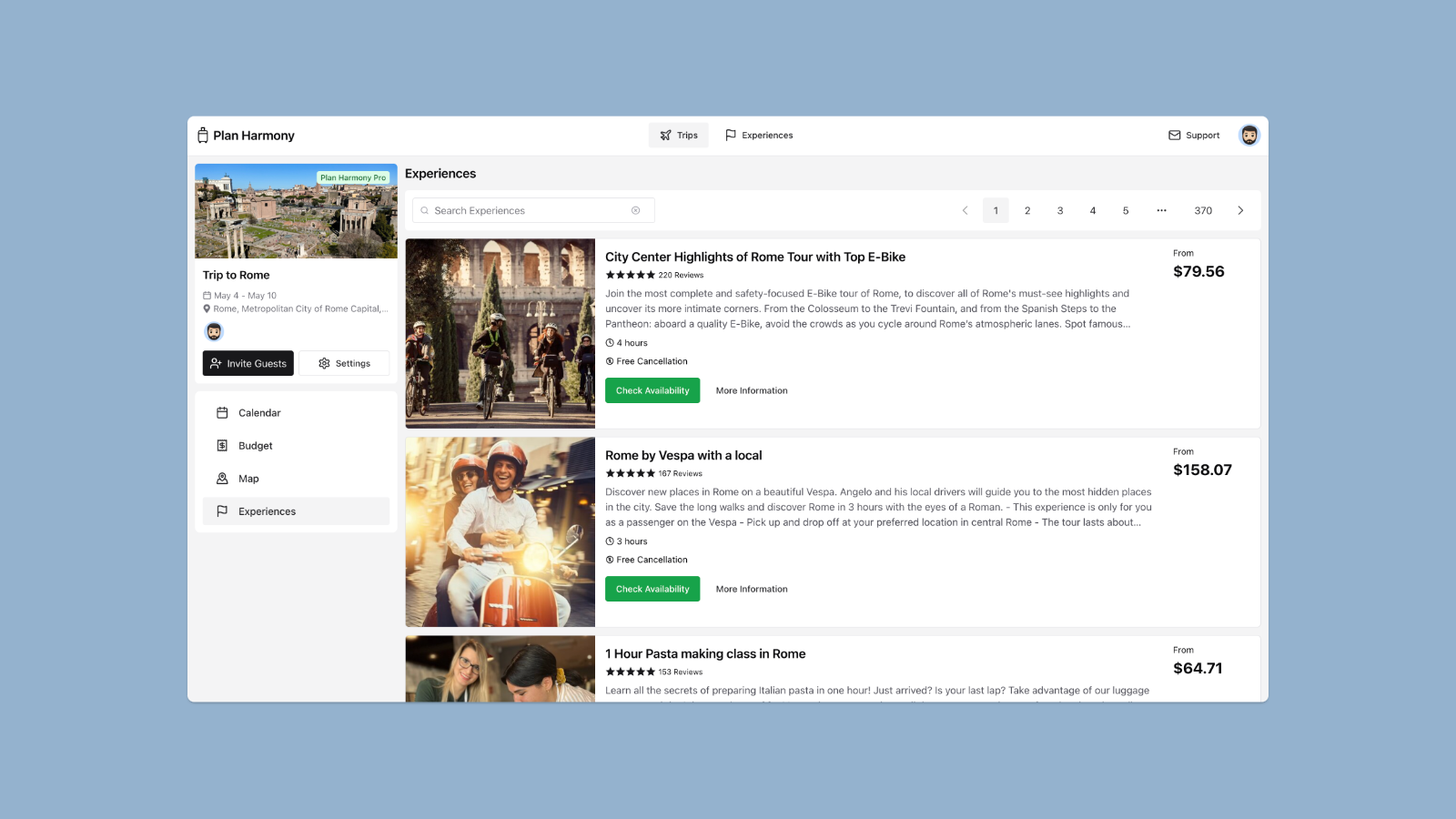
- Local experience platforms. Viator, GetYourGuide, and Airbnb Experiences surface activities run by locals that don't show up in generic search results.
- Neighborhood-specific research. Instead of "things to do in Rome," search "things to do in Trastevere" or "best food in Testaccio." Neighborhoods have their own character, and the best experiences are usually hyperlocal.
- Reddit and niche forums. The r/travel subreddit and destination-specific forums surface the kind of hidden gems that don't make it onto mainstream lists.
- Ask for local recommendations. Your Airbnb host, hotel concierge, or even a bartender at a local spot will point you to things no algorithm can surface.
Plan Harmony's experience discovery pulls from curated databases to suggest activities matched to your destination — including local favorites and off-the-beaten-path options that go beyond the generic tourist hits.
Try Plan Harmony to discover experiences tailored to your group's interests and destination.
Let the Group Decide, Not Just the Planner
The worst version of group travel is one person picking all the activities and everyone else going along with it. Even if the choices are good, the lack of input makes people feel like passengers rather than participants.
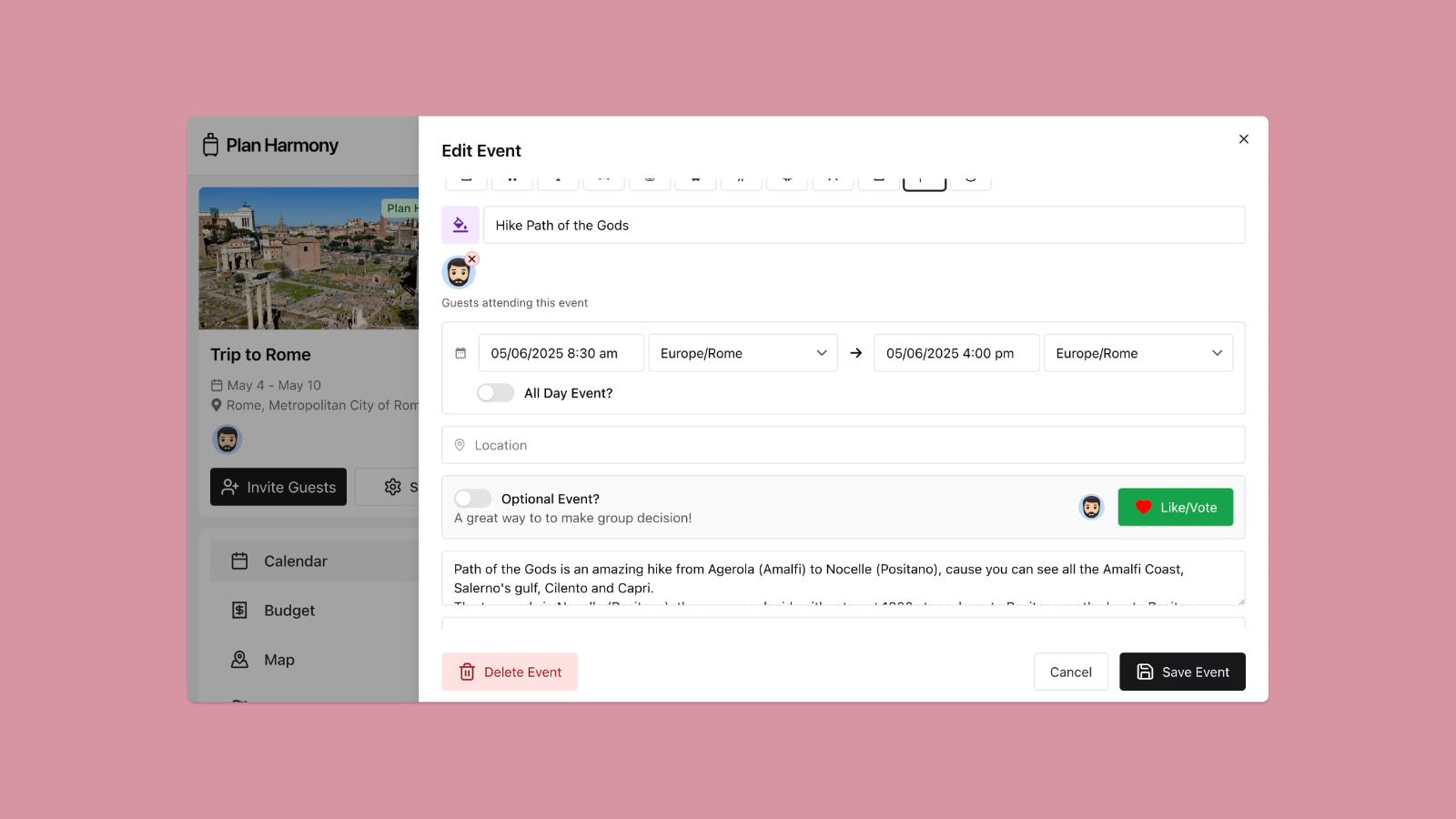
The fix is structured voting. Instead of open-ended "what should we do?" questions, present 2-3 options for each day or time block and let people vote on their preferences. This gives everyone a voice without creating the chaos of unlimited suggestions.
When the cooking class beats the wine tour 4-2, nobody feels railroaded — the group decided together.
Build a Balanced Itinerary
A great group itinerary isn't just a list of highly-rated activities. It's a balanced mix of:
- Group activities (the experiences you're taking this trip for)
- Free time (so people can explore their own interests without guilt)
- Low-key blocks (not every moment needs to be scheduled — sometimes the best memories happen over a long lunch with nowhere to be)
The ratio depends on your group. Adventure-focused groups might want 70% planned, 30% free. Mixed groups with different energy levels might prefer 50/50. The key is making the structure explicit so nobody feels either over-scheduled or under-planned.
The Right Experiences Make the Trip
Activities aren't just items on an itinerary — they're the stories you tell afterward. The cooking class where someone accidentally set off the smoke alarm. The sunset hike where you could see three islands. The market where you found that perfect gift. These moments are what you're actually planning for.
Take the time to find experiences that match your group, not just your destination. Your trip will be better for it.
Start discovering experiences with Plan Harmony — and build a trip your whole group is excited about.
Enjoyed this article?
Share it with fellow travelers planning their next adventure.